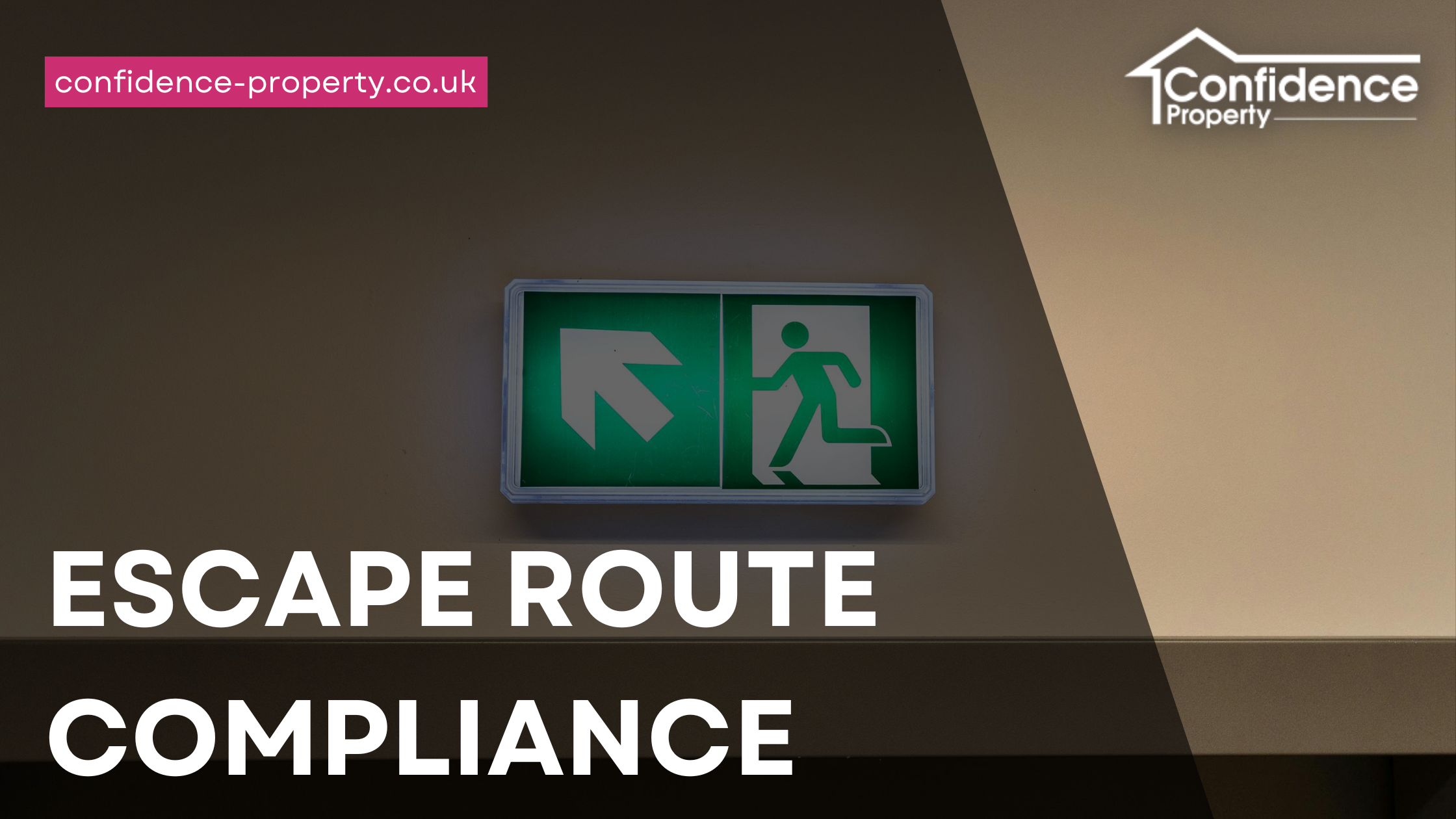
When councils inspect HMOs, one area is assessed immediately — the escape route.
Before paperwork.
Before tenancy agreements.
Before licences.
If the means of escape is compromised, everything else becomes secondary.
Yet during routine visits, we regularly find escape routes that technically exist — but wouldn’t function properly in an emergency.
For HMO landlords, escape route compliance isn’t just a licensing condition. It’s a life-safety responsibility.
What Is an “Escape Route” in an HMO?
An escape route (also referred to as the “means of escape”) is the protected path tenants would use to exit the property safely in the event of fire.
This typically includes:
• Hallways
• Staircases
• Landings
• Final exit doors
• Protected corridors
Under guidance from GOV.UK, HMOs must provide adequate and safe escape routes, appropriate to the size and layout of the property.
That route must remain protected, unobstructed, and properly maintained at all times.
The Most Common Escape Route Failures We See
1. Storage in Hallways and Stairwells
This is one of the biggest recurring issues.
We frequently find:
• Bicycles stored under stairs
• Shoe racks in corridors
• Furniture temporarily placed in hallways
• Boxes and personal belongings along escape paths
Tenants often don’t view communal areas as high-risk. But even partial obstruction can:
• Slow evacuation
• Increase trip hazards
• Provide fuel for fire spread
Escape routes must be completely clear.
2. Fire Doors Wedged Open
Following on from our previous post on fire doors, wedging doors open is still common.
When doors along the escape route are propped open:
• Smoke spreads faster
• Protected corridors lose integrity
• Compartmentation fails
Even small wedges or doorstops can invalidate your fire strategy.
3. Poor Emergency Lighting Coverage
In multi-storey HMOs, escape routes often require emergency lighting.
We regularly see:
• Lighting not functioning during tests
• Expired test records
• Inadequate coverage in darker stairwells
• Battery units not maintained
If a power failure occurs during a fire event, tenants must still be able to see clearly enough to exit safely.
Without compliant emergency lighting, that becomes difficult.
4. Inadequate Fire Separation
Escape routes must be protected from high-risk areas.
Common problems include:
• Non-fire-rated doors opening onto staircases
• Glazed panels without fire rating
• Poorly sealed service penetrations
• Under-stair cupboards without proper fire lining
These issues allow smoke and flames to breach the escape route prematurely.
5. Final Exit Door Issues
The final exit must:
• Open easily from the inside
• Not require a key
• Be free from obstruction
We sometimes find:
• Double-locking systems
• Keys not readily accessible
• Security modifications added after licensing
Security must never override safe escape.
“It’s Always Been Like That…”
This is something we hear often.
However:
• Standards evolve
• Councils increase enforcement focus
• Risk assessments change
• Wear and tear accumulates
Bodies like the National Residential Landlords Association advise landlords to treat fire safety as an ongoing management issue — not a one-off compliance exercise.
Escape routes degrade over time if not actively monitored.
Why Councils Focus Heavily on Escape Routes
Escape routes are:
• Visually assessable
• Immediately critical
• Central to HHSRS hazard evaluation
In areas such as Manchester and Salford, inspection teams are increasingly detail-focused on practical fire safety compliance.
An obstructed or compromised escape route can quickly lead to:
• Improvement notices
• Formal warnings
• Licence conditions
• Increased scrutiny across the property
In serious cases, enforcement action can escalate rapidly.
The Overlooked Risk: Tenant Behaviour
Even if your property was compliant at licensing stage, tenant behaviour can change things quickly.
Examples include:
• Bringing additional furniture
• Storing personal items in communal areas
• Tampering with door closers
• Installing their own locks
Without regular inspections, these issues go unnoticed until a council visit.
That’s reactive management — and it’s risky.
How Often Should Escape Routes Be Checked?
Best practice for HMOs includes:
• Visual checks during routine inspections
• Documented fire safety reviews
• Immediate review after tenant changeovers
• Annual professional assessment aligned with your Fire Risk Assessment
High-turnover properties may require more frequent oversight.
A Simple Escape Route Self-Check for Landlords
Ask yourself:
• Could someone unfamiliar with the property exit safely in the dark?
• Are all corridors completely clear?
• Do all fire doors along the route fully close and latch?
• Is emergency lighting tested and recorded?
• Does the final exit open without a key?
If any answer is uncertain, further review is advisable.
Why Escape Route Compliance Protects More Than Just Tenants
Proper escape route management:
• Reduces liability exposure
• Supports licence renewals
• Protects insurance validity
• Demonstrates responsible management
• Strengthens your compliance position
It also provides peace of mind — which is increasingly valuable in today’s regulatory environment.
The Bottom Line
Escape routes are not just hallways and stairs.
They are engineered life-safety systems that rely on:
• Clear access
• Functional fire doors
• Adequate lighting
• Ongoing management
In HMOs, small changes create significant risk.
Proactive landlords review escape routes regularly. Reactive landlords wait for enforcement.
The difference is usually cost — and sometimes far more.
If you’re unsure whether your HMO escape route would pass inspection today, we offer a structured HMO Compliance Review for landlords.
We’ll assess:
• Fire doors
• Escape routes
• Emergency lighting
• Documentation
• Licensing alignment
Before the council does.
If you’d like to book a review or discuss your property, contact our team today.