Manchester HMO Lessons from 2025

Manchester HMO lessons from 2025 are best understood through what happened in practice rather than in policy announcements. As the year comes to a close, it’s worth reflecting on how HMOs were actually managed across Greater Manchester — where scrutiny increased and judgement mattered more than process.

For many landlords, this wasn’t a year of expansion. It was a year of managing compliance risk, navigating council scrutiny, and ensuring properties were run properly in a tightening regulatory environment.

We manage HMOs across multiple Greater Manchester boroughs and spend a significant amount of time dealing directly with local authority officers. Based on the real situations we dealt with throughout 2025, three clear lessons stand out.


Key Manchester HMO Lessons from 2025

Lesson 1: Compliance is no longer a static checklist — it requires ongoing judgement

One of the strongest themes from 2025 was that HMO compliance is no longer something you “set and forget”.

We regularly spoke to landlords who believed they were compliant, only to find that:

  • Council expectations had evolved
  • Historic advice no longer aligned with current enforcement
  • Licensing, planning, and Article 4 were still being conflated

Properties that had operated without issue for years were being reviewed against current standards, not past assumptions.

One of the realities of managing HMOs in Greater Manchester is that each council applies standards differently, and outcomes often depend on how issues are handled rather than the issue itself.

The lesson:
Compliance now requires periodic review and interpretation, not just a one-off exercise. What matters is how rules are being enforced now, by that council, not how they were applied historically.


Lesson 2: Constructive engagement with councils can materially change outcomes

One of the things that worked particularly well in 2025 was early, persistent, and professional engagement with local councils — especially where complaints, licensing changes, or administrative issues had the potential to escalate unnecessarily.

Several situations highlighted this clearly:

  • In Bolton, a tenant submitted multiple complaints directly to the council, including to Environmental Health, and formally requested that the property’s HMO licence be revoked. Rather than allowing the situation to become adversarial, we set out a clear, evidence-led response addressing each point raised. After reviewing the facts, the council backed the landlord’s position and closed the complaint with no further action.
  • In Rochdale, the sudden introduction of additional HMO licensing led to an initial decision not to grant a licence based on space standards. Instead of accepting a straight refusal or losing rentable rooms, we worked constructively with the council to identify a practical, compliant solution. By engaging early and openly, and demonstrating how the property could meet the intent of the standards, a way forward was agreed that achieved compliance without reducing the number of lettable rooms.
  • In Salford, multiple HMO tenants unexpectedly received council tax bills and summonses despite the properties being correctly assessed. Standard contact routes proved ineffective, while tenants understandably became anxious about enforcement action. In those cases, we attended the council offices in person on behalf of landlords to ensure the issue was reviewed and corrected.

In each case, our role was to act as a buffer — ensuring concerns were dealt with properly, while preventing unnecessary escalation or direct pressure on the landlord.

Outcomes improved because the approach was:

  • Calm and factual
  • Evidence-based
  • Persistent where necessary
  • Focused on resolution rather than confrontation

The lesson:
Councils are not just enforcement bodies — they are stakeholders. When issues arise, experienced management that is prepared to engage properly, stand firm on the facts, and look for workable solutions can materially reduce risk, cost, and stress for both landlords and tenants.

This approach will become even more important as complaint handling and evidential standards tighten under future regulation.


Lesson 3: Early, objective advice can prevent disproportionate risk and cost

While most of 2025 involved routine property management, we were occasionally approached by landlords considering HMO conversions that, once assessed properly, were not viable under Article 4 restrictions.

In those cases, the right advice was not how to proceed — but whether to proceed at all.

Although these situations were not common, they highlighted the value of:

  • Stress-testing assumptions early
  • Taking a step back before committing to cost
  • Prioritising risk reduction over momentum

The lesson:
The most valuable advice isn’t reactive. It’s the advice that stops the wrong decision before money is spent.


What These Lessons Mean for 2026

From 1 May 2026, the Renters’ Rights Bill will introduce further changes to how rented property is managed. While much of the legislation is already known, its real impact will be felt in day-to-day processes and decision-making.

Landlords should expect:

  • Greater emphasis on fairness, consistency, and evidence
  • Less tolerance for informal arrangements or weak records
  • Increased scrutiny of how issues are handled, not just whether they are handled

The direction of travel is clear: strong systems, sound judgement, and credible engagement will matter more than ever.


How We’ll Be Supporting Landlords Going Into 2026

Our focus isn’t to alarm landlords — it’s to protect them through preparation.

As we move into 2026, we’ll be:

  • Reviewing management processes in light of the Renters’ Rights Bill
  • Strengthening documentation around tenancies, maintenance, and communication
  • Continuing proactive, professional engagement with councils
  • Intervening decisively where administrative or enforcement errors risk impacting tenants or landlords unfairly
  • Helping landlords understand what has genuinely changed — and what has not

The aim is simple: reduce exposure, avoid unnecessary conflict, and help landlords remain compliant without overreacting.


Final Thoughts

2025 was a challenging year for HMO landlords, but it was also a revealing one. It showed where systems were strong, where assumptions needed revisiting, and where the right approach could materially improve outcomes.

If you’re managing an HMO in Manchester and want a second pair of eyes on how exposed you are going into 2026 — particularly around complaints, licensing, or council engagement — that’s exactly the kind of conversation we have day to day.

Our focus remains the same: helping landlords operate compliantly, sustainably, and with fewer surprises as the regulatory landscape continues to tighten.


HMO Void Reduction: Fewer Voids, Predictable Rent

For self-managing HMO landlords in Greater Manchester, void periods can quickly erode income and disrupt cash flow. This guide focuses on HMO void reduction, sharing practical strategies to reduce empty rooms and create more predictable rental income — even under shifting tenant expectations and tighter market conditions.

Drawing on our experience working with landlords across Manchester, Salford, Bolton and neighbouring boroughs, here are practical, actionable strategies that work in the local market to help you reduce voids and keep rent income predictable.

1. Pricing Strategies for HMO Void Reduction

Incorrect pricing is one of the biggest causes of prolonged voids in HMOs.

Action:

-Review local comparables weekly (room type, bills included, furnishing levels)

-Adjust asking rents quickly if enquiry levels drop

-Avoid “chasing the market down” after weeks of low demand — price realistically upfront


Why it matters:

A room priced even £25–£50 above market can sit empty for weeks, wiping out any perceived gain. Accurate pricing reduces time-to-let and stabilises income.

2. Actively Manage Room Advertising

Active advert management is one of the most effective HMO void reduction tools available to self-managing landlords.

Action:

-Stage rooms and communal areas before advertising
-Use high-quality photos and short video walkthroughs

-Keep listings refreshed and accurate on platforms such as SpareRoom
-Use featured ads or boosts strategically when demand slows

-Respond to enquiries quickly and pre-qualify leads

-Sell the lifestyle and household fit, not just the room

Why it matters:

Well-presented, well-managed adverts attract better tenants faster and significantly reduce time-to-let.

3. Prioritise High-Commitment Viewings

Not all viewings convert equally. In practice, weekday viewings taken during work hours tend to attract more committed applicants, while weekend viewings often generate higher footfall but fewer reservations.

Action:

-Prioritise weekday viewings where applicants are taking time out of work

-Use weekend viewings selectively and only with pre-qualified applicants

-Set clear expectations upfront on rent, bills, and house suitability to reduce no-shows

-Use video viewings as an initial filter before offering in-person appointments

Why it matters:

Focusing on higher-intent applicants reduces wasted time, shortens decision cycles, and increases the likelihood of securing a reservation quickly.

4. Fix Fast, Clean Often

In HMOs, unmanaged cleanliness and slow repairs are among the fastest ways to lose good tenants.

Action:

-Put a clear housekeeping system in place for communal areas, with responsibilities defined and standards set

-Address messy-tenant issues early through reminders and inspections, rather than waiting for complaints

-Use a simple fault-reporting system so tenants can log issues easily

-Set internal response and completion targets for repairs

-Carry out interim inspections, including bedrooms, to identify issues early

-Build relationships with trusted local contractors who can respond quickly and prioritise your jobs

-Have a clear out-of-hours emergency process so issues are handled without panic or delay

Why it matters:

Clean, well-maintained homes retain tenants longer, reduce complaints, and prevent small issues from turning into void-causing exits.

5. Proactively Foster a Positive Household Environment

A happy household leads to longer tenancies and fewer disputes.

Action:

Implement a tenant conflict resolution policy, including:

– Early intervention when issues arise
– Clear escalation pathways
– Neutral mediation where required
– Carry out preventative check-ins to identify issues before they escalate
– Share clear house rules and communal living expectations

Why it matters:

A harmonious household keeps tenants happy and reduces the risk of disputes that can cause early departures. Proactively managing conflicts, setting clear expectations, and checking in regularly encourages longer tenancies, lowers turnover, and minimises void periods—directly protecting rental income and ensuring more predictable cash flow.

6. Communicate Clearly With Tenants

Good communication helps you avoid misunderstandings that could lead to early departures.

Action:

Set clear expectations from the start (lease terms, maintenance response times, renewal process) to build trust and reduce friction

– Maintain open channels with tenants (email, WhatsApp, property portals)

– Handle queries promptly to foster loyalty

Why it matters:

Consistent, clear communication builds trust, reduces misunderstandings, and prevents early departures. Tenants who feel supported stay longer, renew more often, and recommend the property — directly reducing void periods and stabilising income.

Bonus Tip: Offer Incentives That Actually Work

Small perks can differentiate your property in a crowded market.

Action:

-Offer “refer-a-friend” schemes for current tenants
– Highlight lifestyle benefits: bills included, fast broadband, flexible move-in dates
– Run short-term promotions to attract early sign-ups for high-demand months

Why it matters:

Smart incentives attract quality tenants faster, reducing empty rooms.

Conclusion

Self‑managing HMOs in Greater Manchester don’t have to suffer long voids or unpredictable rent income. By starting marketing early, maintaining your property, and applying our HMO void reduction strategies, you can keep occupancy high and income stable.

At Confidence Property, our Lettings Negotiators help landlords implement these strategies efficiently — and adapt them for local council expectations in Manchester, Salford, Bolton and beyond.

Want a tailored void‑reduction plan for your GM HMO portfolio? Get in touch with us today.

HMO Tenancy Management Manchester: Renters’ Rights Act 2025


The Renters’ Rights Act 2025 is one of the biggest changes in the private rented sector in decades. From May 2026, most fixed-term Assured Shorthold Tenancies (ASTs) will be replaced by rolling periodic tenancies.

For self-managing HMO landlords, this will affect tenancy agreements, turnover, notice periods, and cash flow. Understanding these changes is essential for effective HMO tenancy management in Manchester, Salford, Bolton and surrounding areas.


What’s Changing: Fixed-Term ASTs → Periodic Lets

  • Automatic conversion: All ASTs (new and existing) will become periodic tenancies from 1 May 2026.
  • Tenant notice: Tenants can end tenancies with short notice (usually two months).
  • No-fault evictions removed: Section 21 evictions are abolished; landlords must rely on valid Section 8 grounds.

Implications for HMO Tenancy Management in Manchester

  • Fixed end dates can no longer be relied on to regain possession.
  • Short-notice terminations may increase mid-term turnover.
  • Rent and occupancy become less predictable — careful cash-flow planning is essential.
  • Accurate record-keeping (rent payments, maintenance, communications) is vital for Section 8 possession.

Practical Steps for Self-Managing HMO Landlords

StepActionWhy It Matters
1Audit tenancy agreementsIdentify ASTs that will convert and note clauses, start/end dates
2Update tenancy documentationPrepare compliant periodic tenancy templates to avoid invalid contracts
3Strengthen record-keepingLog rent, tenant conduct, maintenance, and communications; supports Section 8 claims
4Plan for turnover & cash flowBudget for voids, cleaning, repairs, and re-letting costs
5Adjust letting strategyMarket to flexible tenants (students, sharers, young professionals); consider room-by-room approach
6Communicate with tenantsExplain upcoming changes and reassure them on safety and standards
7Review property complianceEnsure HMO licence, inspections, fire/CO checks, and maintenance are up to date

Maximising Success as a Landlord: Opportunities in HMO Tenancy Management Manchester

  • Tenant flexibility is attractive: Rolling tenancies appeal to sharers, students, and professionals seeking shorter commitments.
  • Retention through good management: Responsive landlords with high standards can still maintain long-term tenants.
  • Competitive advantage: Landlords who prepare early reduce risk, improve efficiency, and stay ahead of competitors.

Conclusion

The Renters’ Rights Act 2025 replaces fixed-term ASTs with rolling periodic tenancies, creating both challenges and opportunities for HMO landlords. Effective HMO tenancy management in Manchester now means auditing agreements, updating paperwork, tightening records, and planning for turnover.

Next Step: Don’t leave it to the last minute. Confidence Property can take the stress out of HMO tenancy management in Manchester, handling tenancy transitions, compliance, marketing, and day-to-day management. Contact us today to secure hassle-free, compliant, and profitable HMOs.


Fire Safety in Manchester HMOs

Fire Safety in HMOs

What Councils Are Really Looking For with Fire Safety in Manchester HMOs in 2025 — And How to Avoid Fines

Fire safety isn’t just a compliance box in Manchester HMOs — it’s the area where Manchester councils issue some of their biggest fines. With multiple households sharing kitchens, electrics, and escape routes, small issues can quickly turn into major safety failures. And in the last 12 months, Manchester, Salford, and Stockport have all tightened enforcement, particularly around documentation and fire door performance.

As an HMO landlord, the question isn’t “Am I compliant?”

It’s “Would my HMO pass an inspection today if an officer walked in unannounced?”

Why This Matters More in Manchester Right Now

Local councils have been increasingly active with HMO inspections — and they’re focusing on areas landlords often assume are fine:

  • Manchester City Council increasingly expects fire risk assessments to be done by a competent person, not a generic or DIY template.
  • Salford is known for being relentless about fire doors not latching or shutting slowly.
  • Stockport often checks documentation and testing logs before even looking at the physical building.
  • Bolton pays close attention to tenant behaviour — like propped doors or blocked escape routes.

In other words: most failures happen in the areas landlords think are “minor”.

Common Fail Points We See in Fire Safety in Manchester HMOs

These are real issues we’ve seen in properties assessed in 2024–25. If any sound familiar, your HMO may not pass an inspection:

1. Fire Doors Not Closing or Latching

Even a 2–3mm gap can lead to a fail.

Tenants often wedge doors open or damage the auto-closers.

2. Incomplete Alarm Testing Logs

Councils want evidence — not “I test them regularly”.

A missing month of records can trigger enforcement.

3. Outdated or Inadequate Fire Risk Assessments

Manchester officers now frequently ask who carried out the FRA and check if they’re competent.

4. Kitchens Overloaded With Appliances

Multiple kettles, fridges, air fryers, extension leads, all increase fire risk and must be managed.

5. Escape Routes Blocked After Move-In

Landlords often pass the initial inspection…

…and then fail later because tenants add shoe racks, bikes, drying racks, storage boxes.

If any of these happen in your property, you’re exposed, even if the rest of the HMO is perfect.

Your Legal Responsibilities for Fire Safety in Manchester HMOs (Made Simple)

1. Fire Risk Assessment (FRA)

You must have a current written FRA.

Update it whenever the layout or occupancy changes.

Manchester-specific tip:

DIY FRAs are rarely accepted for larger HMOs — councils expect a competent assessor.

2. Fire Detection & Alarm Systems
  • Smoke alarm in every bedroom
  • Heat alarm in every kitchen
  • Interlinked throughout the building

Landlord reality check:

A system that works isn’t enough — it must be maintained, tested, and logged.

3. Escape Routes Must Stay Clear
  • Fire doors must close properly
  • Stairways and corridors must be free from clutter
  • Exit routes must be obvious and unobstructed

Manchester fail point:

Door closers that don’t fully shut consistently.

4. Fire Blankets (Not Extinguishers)

Fire extinguishers are no longer recommended unless specifically required by the FRA.

Instead, use fire blankets in all shared kitchens.

5. Electrical & Gas Safety
  • Annual gas safety checks
  • PAT testing
  • Immediate repair of faulty appliances

Tip:

Appliances that repeatedly trip the fuse board are not minor issues — risk assessors flag these.

5-Step Self-Assessment: Would Your HMO Pass an Inspection Today?

Tick any that apply:

  • ☐ One or more fire doors don’t latch fully
  • ☐ Your FRA hasn’t been updated after layout, occupancy, or usage changes
  • ☐ You don’t have weekly/monthly alarm testing logs
  • ☐ Tenants regularly block escape routes
  • ☐ You’re not 100% sure your alarms are interlinked correctly

If you ticked even one, your HMO could fail an inspection — and councils are currently issuing fines for exactly these issues.

What Happens If You Don’t Get This Right

In the past 18 months across Greater Manchester, landlords have faced:

  • Fines up to £30,000 for inadequate fire precautions
  • Enforcement notices requiring costly upgrades
  • Licence refusal for repeat non-compliance
  • Legal action if tenants are injured in a fire

Most cases weren’t “dangerous” HMOs — they were complacent ones.

What Most Manchester Landlords Get Wrong

And why our team keeps getting called after an inspection, instead of before.

  • The FRA isn’t robust enough.
  • The fire doors worked when the licence was issued but haven’t been checked since.
  • The alarm test logs are inconsistent.
  • Tenants have created new risks after moving in.
  • The landlord assumes the managing agent is checking everything (they often aren’t).

If any of these apply, the property may technically be non-compliant right now.

If You Want a Safe, Compliant HMO in 2025–26: Here’s the Next Step

Most Manchester landlords we audit are compliant in 60–80% of areas — but still miss 2–3 issues that councils fine heavily for.

If you want peace of mind that your property is genuinely fire-safe and ready for the new enforcement approach in 2025–26:

Book a Free 15-Minute Fire Safety Check Call with Confidence Property

In this call, we’ll:

✓ Review your current fire safety setup

✓ Tell you if your FRA is likely to be accepted by Manchester councils

✓ Identify the most common fail points in your type of HMO

✓ Give you a clear plan to fix any risks quickly

This is quick, practical, and could protect you from thousands in fines.

Renters Rights Act: Key dates confirmed

renters rights act

On the 13/11/25 the Government has officially confirmed that the Renters Rights Act will begin its rollout on 1 May 2026, marking one of the most significant shake-ups in the private rented sector in decades. These changes affect all landlords in England — including those letting HMOs — whether you self-manage or work with an agent.

If you’re self-managing or relying on an agent who isn’t proactive, you’ll need to prepare carefully to stay compliant. At Confidence Property, we’re already planning ahead so our landlords don’t get caught out.


What the Renters Rights Act changes from 1 May 2026?

From 1 May 2026, the following legal changes will apply across all tenancies:

  • All tenancies become periodic — fixed terms will no longer apply.
  • Section 21 is abolished — all evictions must go through updated Section 8 grounds.
  • Rent increases limited to once per year, using the revised Section 13 process.
  • Only one month’s rent in advance may be requested — upfront rent deals will no longer be allowed.
  • Rent bidding and discriminatory adverts are banned — this includes advertising to preferred age groups or excluding benefit claimants.
  • A new Government Information Sheet must be provided to all current tenants

These rules apply to all landlords — but for HMO landlords managing multiple rooms, tenancy churn and rent reviews, the operational impact is likely to be greater.


Further Renters Rights Act measures expected later in 2026

The second phase of the Renters Rights Act is expected to introduce more administrative duties, including:

  • Mandatory landlord registration on a new PRS Database
  • Compulsory membership of a Government-approved Landlord Ombudsman
  • A Decent Homes Standard, with repair timeframes likely to mirror the social housing system (inspired by Awaab’s Law)

The Government has not yet confirmed rollout dates for these measures, but they are expected later in 2026, and will likely include registration fees and ongoing compliance obligations.


What should HMO landlords do now?

If you’re self-managing

understanding the Renters Rights Act is essential. You’ll need to plan and update your tenancy processes well ahead of May 2026. Key steps include:

  • Review your existing tenancies — if you were considering using Section 21 for possession, you’ll need to act before the cut-off.
  • Plan to update your tenancy agreements — periodic tenancy formats will be required for all new lets.
  • Get ready to issue the Government Information Sheet to every tenant.
  • Review rent increase schedules — only one rent review will be allowed every 12 months, so timing and notice accuracy will matter.
  • Ensure your paperwork and inspections are up to standard — evidence will be critical when using Section 8 for possession.
  • Stay alert for updates on the PRS Database and Ombudsman registration.

If you use an agent

Not all agents are prepared for these changes — particularly those without experience in HMO compliance. Make sure your agent is:

  • Updating tenancy documentation in line with the new periodic rules
  • Preparing to issue the Government Information Sheet to existing tenants
  • Ready to implement Section 13 correctly for rent reviews
  • Keeping accurate inspection and complaint records to support future possession
  • Monitoring Government announcements on landlord registration and ombudsman rules

If you’re unsure, ask your agent for a written summary of how they plan to comply.


What we’re handling for our clients

If you’re already with us, here’s how we’re preparing on your behalf:

  • Reviewing tenancies in advance of May 2026 to identify any potential possession issues
  • Issuing updated tenancy agreements using the required periodic format from 1 May onwards
  • Distributing the Government Information Sheet to all current tenants ahead of the deadline
  • Managing rent increases to ensure timing and notice formats follow the revised Section 13 rules
  • Keeping records — including inspection photos, complaint logs, and maintenance reports — to support Section 8 claims if needed
  • Handling PRS registration and Ombudsman membership for all fully managed clients once the Government confirms the requirements

Need help preparing?

For landlords currently self-managing — or working with agents who aren’t addressing the changes — we can step in. At Confidence Property, we specialise in supporting HMO landlords through regulatory shifts like this one.

We can:

  • Audit your portfolio for risks and readiness
  • Update tenancy documents and notices to meet the new legal requirements
  • Provide compliant rent review processes
  • Take over management, ensuring full compliance ahead of May 2026
  • Handle registration and admin once the PRS Database and Ombudsman schemes go live

Our approach is proactive, compliant, and focused on protecting your income and legal position.


Don’t wait until it’s too late

May 2026 may seem distant, but the work needed to prepare — particularly for HMOs — can’t be left to the last minute. Whether you need a one-off compliance check or full management support, we’re here to help.

Section 21 Renters Bill: Why HMO Landlords Must Act Fast

Section 21 Renters Bill

If you’re a landlord considering selling your HMO or changing its use, you need to act before summer 2025. The Section 21 Renters Bill will introduce major changes, including abolishing Section 21 evictions and replacing them with stricter Section 8 possession grounds.

Once the bill is in force, landlords will:

  • No longer be able to use Section 21 for no-fault evictions.
  • Need to give four months’ notice under Ground 1A – Sale.
  • Be unable to serve notice within the first 12 months of a tenancy.
  • Face a 12-month restriction on reletting after regaining possession.

If you serve a Section 21 notice before the new law takes effect, you can still regain possession under current rules—but you must act quickly. The NRLA confirms that once the bill becomes law, landlords will only have three months to apply for a possession order before the notice becomes invalid.

This doesn’t just apply to landlords selling an HMO. If you plan to convert your HMO into a single-let property, supported living, or another rental model, you could also be affected.

💡 Feeling overwhelmed by legislative changes and compliance? Find out how we can help and make managing your property easier.

When Will the Section 21 Renters Bill Take Effect?

The government and NRLA confirm that the Section 21 Renters Bill is expected to take effect in summer 2025. However, the final date is not confirmed, and it could be introduced later.

The bill will apply immediately to all existing tenancies, meaning landlords won’t have a transition period to adjust to the new rules.

How Will the Section 21 Renters Bill Affect Evictions?

Currently, landlords can use Section 21 to regain possession within two months if they follow the correct legal steps. Once Section 21 is abolished, landlords will need to rely on Ground 1A – Sale, which has stricter requirements:

  • Four months’ notice instead of two.
  • A 12-month waiting period before serving notice on a new tenancy.
  • A 12-month restriction on reletting after regaining possession.

This will make it much harder to regain possession quickly, affecting landlords who want to sell their HMO or convert it into a different rental model.

Deadline for Using Section 21 Before the Renters Bill

Even if you serve a Section 21 notice before the new law takes effect, you must act promptly. The NRLA confirms that:

  • Any possession claim must be issued before the expiry of the Section 21 notice or within three months of the bill’s commencement—whichever is sooner.
  • If you fail to apply to court in time, your Section 21 notice will become invalid, and you will need to rely on the new Ground 1A – Sale.

This means that simply serving a Section 21 notice early is not enough—landlords must be prepared to take legal action if tenants do not leave voluntarily.

When Should I Serve a Section 21?

If you are selling your HMO or changing its use, we believe the best time to serve a Section 21 notice is May 2025. Here’s why:

  • A Section 21 notice lasts for six months, but under the new law, landlords will only have three months after the bill is enacted to apply for possession.
  • If the bill takes effect in summer 2025, a Section 21 notice served in May would still be valid, but you must apply to court within three months of the bill’s commencement if tenants do not leave.
  • If the bill is delayed and comes into effect later in summer 2025, you’ll still have the normal six-month window to act.
  • Serving notice too early could cause tenants to panic and move out sooner than expected, leading to unnecessary rental voids.

By serving a Section 21 notice in May 2025, landlords:

Lock in the two-month notice period before it extends to four months.
Ensure they can regain possession before the bill introduces new restrictions.
Reduce the risk of tenants moving out too early, which could cause rental voids.

How to Serve a Section 21 Notice Correctly

To avoid delays or legal challenges, landlords must follow the correct legal steps when serving a Section 21 notice.

1. Ensure Compliance Before Serving Notice

Before serving a Section 21 notice, you must have:

  • A valid Energy Performance Certificate (EPC).
  • A Gas Safety Certificate (if applicable).
  • Provided tenants with the latest How to Rent guide.
  • Protected the tenant’s deposit in a government-approved scheme.

2. Use the Correct Notice Form

  • Serve a Form 6A notice (available on GOV.UK).
  • Deliver the notice in person, by post, or electronically (if agreed with the tenant).

3. Obtain Proof of Service

To prevent disputes, landlords should obtain clear evidence that the Section 21 notice was served correctly. Recommended methods include:

  • Certificate of Service (Form N215).
  • Tenant Acknowledgment: A signed and dated copy of the notice.
  • Time and Date-Stamped Photograph: A photo of the notice being delivered.
  • Witness Statement: A written statement from a witness.

If sending by post, use recorded delivery and keep the tracking receipt.

Need Expert Help?

Navigating these legal changes can be complicated, but working with a professional HMO management company like us can help you stay informed and compliant. We can:

  • Ensure your eviction process follows legal requirements.
  • Help with HMO compliance and tenant management.
  • Provide guidance on the latest changes affecting landlords.

If you’re planning to sell or change the use of your HMO, it’s important to stay ahead of these new regulations. Get in touch with us today to discuss your options and avoid getting caught by the upcoming legal changes.

Lawful Development Certificate: How to Get One

lawful development certificate

For landlords with Houses in Multiple Occupation (HMOs) in Article 4 areas, obtaining a Lawful Development Certificate (LDC) can sometimes be required. Without one, councils may challenge the planning status of a property, which can be stressful for landlords. An LDC helps confirm that a property’s use is lawful, offering clarity and protection in certain situations.

This guide explains when an LDC might be necessary, the process for applying, the cost involved, and how it can help protect your property.


Why You Might Need a Lawful Development Certificate

Planning Policy Context

Under the Town and Country Planning (General Permitted Development) (England) Order 2015, the change of use from a single-family dwelling (C3) to a small HMO (C4) is permitted under certain conditions. However, in Article 4 areas, these permitted development rights are removed, meaning landlords must prove the lawful use of their property before the Article 4 restrictions were implemented.

A Lawful Development Certificate may be required for HMO landlords in Article 4 areas in the following situations:

  1. HMO licences with conditions: Some councils issue temporary HMO licences on the condition that landlords secure planning permission or an LDC.
  2. Selling an HMO: Buyers and solicitors often request proof of lawful use to avoid delays during the sale process.
  3. Re-financing an HMO: Mortgage lenders may require confirmation of the property’s planning compliance before approving loans.
  4. Responding to council complaints: Complaints from tenants or neighbours about the property may lead to investigations. An LDC provides evidence to address council concerns promptly.
  5. Long-term protection: Even when not strictly required, an LDC offers peace of mind by confirming the property’s lawful use under planning regulations.

The Cost of Applying for a Lawful Development Certificate

The cost of applying for an LDC varies by local authority but is generally based on national planning fee regulations. As of 2025 for existing use: The fee is currently £578. In addition to the application fee, landlords may incur costs for engaging a planning consultant or architect to help prepare the application, if needed. The costs for professional assistance vary but can range from £500 to £2,000, depending on the complexity of the application.


The Process for Applying for a Lawful Development Certificate

Applying for an LDC involves several steps:

  1. Determine the Type of Certificate Needed:
    • An existing use certificate is for properties already in HMO use before Article 4 was introduced.
  2. Prepare Your Evidence:
    Gather documents demonstrating lawful use, including:
    • Tenancy agreements
    • Council Tax records
    • HMO licences
    • Utility bills
    • Building control certificates (if applicable)
  3. Complete the Application Form:
    Forms can be downloaded from your local council’s planning portal or completed online via the Planning Portal.
  4. Submit Supporting Documents:
    Attach all relevant evidence, along with:
    • A location plan clearly showing the property boundaries (these can often be purchased online).
    • Floor plans (if required to demonstrate the internal layout).
  5. Pay the Application Fee:
    Fees are typically paid online or via your council’s planning department.
  6. Await the Council’s Decision:
    Councils aim to make a decision within 8 weeks. However, if additional information is requested, this timeframe may be extended.
  7. Receive the Outcome:
    If approved, the LDC confirms the property’s lawful use as an HMO. If refused, the decision will outline the reasons, and you may have the option to appeal. If that fails then you will have to apply for full planning or reconsider the use as an HMO.

The Value of an LDC During Council Investigations

If a complaint is made by a tenant or neighbour, councils may investigate the property’s use as an HMO. This can be a worrying experience for landlords. An LDC can be invaluable in these situations:

  • Proof of Lawful Use: An LDC demonstrates that the property’s use is lawful, helping landlords respond to council concerns quickly and effectively.
  • Prevents Enforcement Action: Without an LDC, landlords risk enforcement notices requiring the property to be returned to single-family use (C3), which can result in financial losses.
  • Resolves Disputes: Neighbour complaints about noise or anti-social behaviour often lead to scrutiny of HMO planning status. An LDC removes any doubt about compliance.
  • Avoids Retrospective Applications: If the council challenges a property’s use, applying for retrospective planning permission can be costly and uncertain. An LDC obtained in advance avoids this risk.

Common Reasons for Refusal

Applications for an LDC may fail for several reasons, such as:

  • Insufficient Documentation: Missing tenancy agreements, licences, or other supporting documents.
  • Inconsistent Evidence: Discrepancies in dates or gaps in the evidence provided.
  • Lack of Clarity: Ambiguities in the documentation that fail to prove lawful use.

Carefully preparing and reviewing your evidence can help avoid these issues and strengthen your case. You really want to do everything you can to avoid a refusal which would leave you having to either appeal, apply for full planning or change the use of your HMO.


Practical Tips for a Strong Application

  1. Organise Your Evidence: Present documents in chronological order to create a clear timeline of HMO use. Provide as much detail possible.
  2. Address Gaps: If there are periods when the property was vacant, provide explanations or supplementary evidence.
  3. Submit a Cover Letter: Summarise your evidence and explain how it meets the council’s criteria.
  4. Engage Professionals: If you’re unsure about the planning requirements, we recommend working with a planning consultant or architect to help you navigate the process.

Reducing Stress and Protecting Your Property

Applying for a Lawful Development Certificate can be a helpful way to address concerns about the legal status of your HMO. Whether you’re responding to a council investigation, preparing to sell, or refinancing your property, an LDC provides valuable reassurance and protection.

At Confidence Property, we’re not planning experts but we’re always happy to chat about our clients’ experiences with LDC applications. If you’re unsure about your planning status, we recommend speaking with a planning consultant or architect for expert advice. Feel free to contact us, and we’ll be happy to share insights and discuss how we can support your broader HMO management needs.

The Renters Rights Bill: Where Are We Now? January 2025 Update

renters rights bill

The Renters Rights Bill is steadily progressing through Parliament, promising sweeping changes to the UK’s private rental sector. For HMO landlords in Greater Manchester, these reforms bring both challenges and opportunities. As your local HMO specialists, we’re here to keep you informed and prepared.

The Latest Developments

The Bill is currently at the Report Stage in the House of Commons, set for 14 January 2025. During this phase, MPs debate and vote on amendments, fine-tuning the Bill before its Third Reading. Following this, it will move to the House of Lords for further scrutiny. If significant amendments arise, the Bill may return to the Commons before receiving Royal Assent​.

The Government has prioritised fast-tracking the legislation, reflecting its commitment to reforming the rental market. Once passed, secondary legislation clarifying provisions such as periodic tenancies is expected by summer​.

What the Renters Rights Bill Means for Landlords

Periodic Tenancies: Flexibility for Tenants, Risks for Landlords

The abolition of fixed-term agreements means all tenancies will become periodic, enabling tenants to end their agreements with just two months’ notice at any time. This introduces a new level of uncertainty for landlords, particularly in the HMO market, where coordinated tenant turnover is crucial.

For joint tenancies, the departure of one tenant could force the remaining occupants to leave, creating unexpected void periods and administrative challenges​.

Tougher Eviction Rules under The Renters Rights Bill

The Bill eliminates Section 21 ‘no-fault’ evictions, requiring landlords to rely on Section 8 grounds to regain possession. While this aims to enhance tenant security, it complicates the eviction process for landlords. Grounds such as rent arrears, property damage, or anti-social behaviour now require robust evidence.

In HMOs, this change could disproportionately affect landlords. A disruptive tenant can disturb the entire household, yet proving anti-social behaviour under Section 8 remains a complex and often lengthy process​.

Financial and Administrative Implications of the Renters Rights Bill

Other proposed measures, like limiting advance rent payments to one month, could strain landlords’ cash flow. Combined with increased tenant turnover, these changes demand a more strategic approach to property management.

Insights from the Report Stage

The Report Stage plays a critical role in shaping the Renters’ Rights Bill. MPs focus on debating the finer details, ensuring the legislation addresses key concerns while remaining practical. For landlords, understanding these discussions is essential to preparing for implementation.

Labour’s emphasis on rental reform has accelerated this process, with the Housing Minister highlighting a summer 2025 timeline for full enactment. Landlords are encouraged to contribute to the debate by contacting their local MP—a simple but effective way to voice concerns or seek clarification​.

The Impact on HMO Landlords of The Renters Rights Bill

Managing Tenant Turnover

With tenants gaining the flexibility to leave at short notice, landlords must adapt to a more fluid rental market. Proactively building strong tenant relationships and maintaining high property standards can help minimise turnover.

Addressing Anti-Social Behaviour

In HMOs, one problematic tenant can disrupt the household dynamic, affecting other occupants and your ability to attract new tenants. The Bill’s reliance on Section 8 grounds means landlords will need to document incidents meticulously and act swiftly to avoid prolonged disputes.

Navigating Joint Tenancies

Joint tenancies may become particularly challenging under periodic agreements. The departure of a single tenant can trigger a chain reaction, leaving landlords to fill multiple rooms simultaneously.

Confidence Property: Your Partner in Change

At Confidence Property, we specialise in managing HMOs across Greater Manchester, providing expert guidance to navigate these challenges:

  • Legislation Compliance: We keep landlords informed of legal changes and help ensure properties meet evolving standards.
  • Tenant Selection: Our rigorous screening process reduces the risk of disputes and improves tenant retention.
  • Proactive Management: From handling anti-social behaviour to addressing unexpected vacancies, we take the stress out of HMO ownership.

Staying Updated

Understanding the Renters’ Rights Bill is crucial for safeguarding your investment. We’ll continue to provide updates to help you adapt as the Bill progresses​.

Preparing for the Future

The Renters’ Rights Bill is more than a legislative change—it’s a call to action for landlords to rethink their strategies. By partnering with Confidence Property, you gain not just compliance but peace of mind. Together, we can turn these challenges into opportunities for growth.

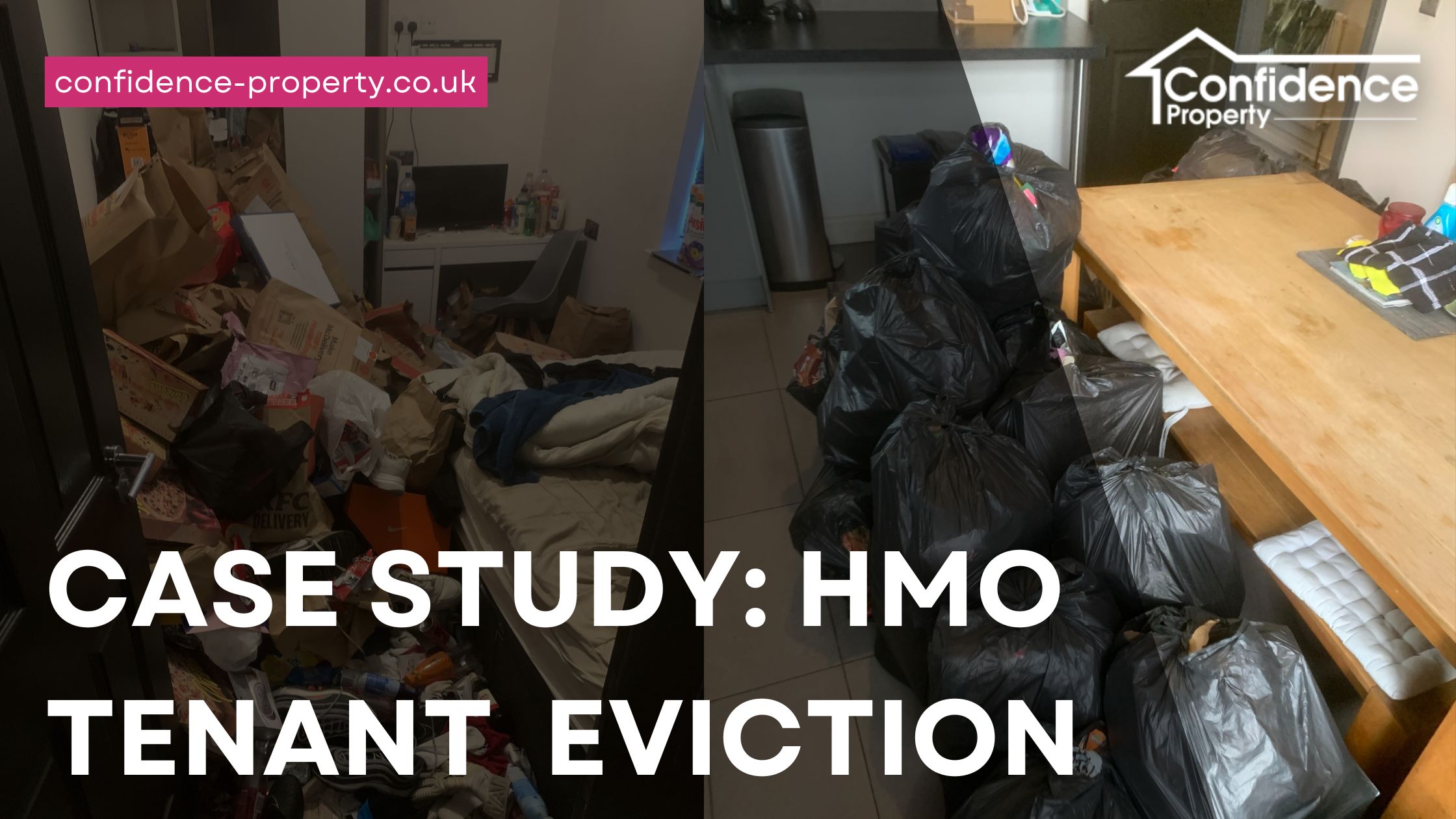
Evicting HMO Tenants: A Case Study on Anti-Social Behaviour

evicting HMO tenants

Managing tenants in a House in Multiple Occupation (HMO) can be a challenging task, especially when anti-social behaviour disrupts the harmony of the household. Evicting HMO tenants is often a last resort, but sometimes it becomes the only solution to protect the property and other tenants. This case study explores a real eviction, providing valuable insights for landlords facing similar issues.


A Problematic Tenant: The Background

The tenant in this case appeared ideal during the initial vetting process. They had a stable full-time job, a clean rental history, and passed all checks, including credit reports and references. Unfortunately, a few months after moving in, their housemates began to complain.

Key Issues:

  • Hygiene Concerns: Foul odours and flies emanated from the tenant’s room.
  • Fire Risk. During the servicing of the fire alarm a pile of fast food packaging in the tenant’s room was identified as a fire risk, prompting the property manager to clear the room and remove 36 bags of rubbish
  • Unresolved Problems: Despite multiple verbal and written warnings, the tenant failed to address the issues.

After months of failed interventions, the landlord had no choice but to begin the formal process of evicting the tenant. The tenant then decided to stop paying rent.


The Eviction Process: Step-by-Step

Evicting HMO tenants requires adherence to strict legal protocols. Here’s how this case unfolded.

Step 1: Early Warnings and Section 21 Notice

  • 3 months into tenancy: Complaints began, prompting the first warning.
  • 4 months into tenancy: Multiple written notices were issued, with no lasting resolution.
  • 5 months into tenancy: A Section 21 (S21) notice was served, giving the tenant two months to vacate.

Step 2: Escalation to Court Action

  • Day 1: Accelerated possession documents were posted to the court.
  • Day 19: A call from the court received to pay the £355 court fee was paid and the claim was issued. (Delay occurred due to the landlord not having a cheque.) The tenant was given 14 days to file a defence.
  • Day 39: Following a lack of defence, a request for a Possession Order slip was posted to the court.
  • Day 45: Letter received from the court stating the slip was incorrect, as an option had not been selected.
  • Day 46: A corrected slip was posted, indicating a request for possession and costs.
  • Day 84: A letter from the court advised that the claimant was not entitled to use the accelerated possession procedure. A court hearing was scheduled for Day 97.
  • Day 88: Solicitor instructed to attend the court hearing.
  • Day 97: The court hearing was held. The judge awarded possession and costs, with the tenant ordered to vacate by Day 111.
  • Day 114: Request for Warrant of Possession emailed to the court.
  • Day 137: A callback from the court was received, and the £143 bailiff fee was paid. The warrant was issued.
  • Day 153: Notice of the bailiff’s appointment was issued for Day 201.
  • Day 166: Confirmation slip posted to the court.
  • Day 201: The property manager attended with a locksmith to change the locks. The bailiff arrived but couldn’t proceed due to an error in the paperwork (missing room number). Despite this, the tenant agreed to move out voluntarily and signed a deed of surrender. The tenant vacated the property.
  • Day 215: The court issued another notice for a follow-up appointment 2 months later, although this was unnecessary as the tenant had already vacated.

Timeline Summary of Evicting HMO Tenants

  • 6.5 Months to Gain Possession: From the initial Section 21 notice to gaining possession
  • 3 Months for Bailiff Enforcement: From the Warrant of Possession request to the bailiff’s appointment

The Costs of Evicting HMO Tenants

Evicting HMO tenants can be financially draining. Here’s the breakdown for this case:

  • Rent Arrears: £4,214
  • Costs: £2,828
  • Total Financial Loss: £7,042

This underscores the importance of avoiding delays and procedural errors during the eviction process.


Lessons Learned

This case highlights key lessons for landlords managing HMO properties:

1. PCOL vs Accelerated Possession

The accelerated possession procedure is paper-based and onerous, which led to several delays during the process, not to mention printing and posting the 267-page claim. A three-week delay occurred because the landlord couldn’t immediately make the required payment as it required a cheque. Later, a one-week delay was caused when the possession slip was rejected due to a box not being crossed out. Using the Possession Claim Online (PCOL) system could significantly reduce delays although it requires a court hearing. It allows landlords to make payments easily with a debit card and simplifies the process by enabling online submissions and corrections.

2. Double-Check AST Details

In this case, the Assured Shorthold Tenancy (AST) mistakenly listed the Agent’s name instead of the Landlord’s name due to a software error. This oversight led to the court determining that the claimant (the Landlord) did not appear to have a legal interest in the tenancy, triggering a court hearing. To avoid similar issues, add a step to your process to verify that the Landlord’s name is correctly shown on all ASTs. If any ASTs are found to have errors, reissue them promptly to ensure compliance and prevent complications.

3. Call The Bailiff On the Morning of the Eviction

A court administrative error resulted in the room number being omitted from the warrant of possession resulting in the bailiff being unable to carry out the eviction and a potential further 2-month delay. On the morning of the possession, contact the bailiffs to confirm that the room number is correctly shown on the warrant and get them to add it if not.

4. Act Promptly on Anti-Social Behaviour

A delay of five months occurred between the issue being logged and the Section 21 notice being served. While the intention was to give the tenant ample opportunity to address their behaviour, issuing the Section 21 notice earlier would have provided a necessary safeguard while still allowing time to work collaboratively with the tenant. Introducing a clear trigger for issuing a Section 21 notice after a set period of persistent anti-social behaviour—adjusted for severity—can help balance fairness with the need to protect the property and other tenants.


Communication as a Key Strategy

Despite the many challenges, the tenant eventually agreed to move out voluntarily. Open communication and negotiation played a crucial role in resolving the situation without further delays. This demonstrates the value of maintaining professional yet firm relationships with tenants, even during disputes.


The Importance of Proactive Management to avoid Evicting HMO tenants

Evicting HMO tenants can be a lengthy and costly process, but it also offers valuable lessons in proactive property management. By implementing robust procedures, maintaining clear communication, and addressing issues early, landlords can safeguard their investments and create a harmonious environment for all tenants.

Confidence Property offers professional support to landlords, helping to prevent and manage anti-social behaviour in HMOs through proactive tenant management and regular property inspections. If issues do arise, Confidence Property can guide landlords through the legal process and connect them with experienced housing solicitors to ensure the matter is resolved efficiently and in compliance with all legal requirements.

Salford Selective Licensing Ends 20/11/24 – Is Your HMO Ready?

salford selective licensing

The Salford selective licensing scheme in Langworthy, Weaste, and Seedley will officially end on 20 November 2024, impacting landlords with properties in these specific areas. This change requires HMO landlords, particularly those managing 3–4 bed properties, to take action to remain compliant under new licensing requirements. Without renewal of selective licensing in these designated neighbourhoods, small Houses in Multiple Occupation (HMOs) previously covered must now apply for an additional HMO licence to continue operating legally.

For Salford landlords, understanding and preparing for this transition will ensure compliance and protect against potential penalties. Here’s what this change means and how landlords can prepare.

Salford Selective Licensing Expiry and Its Impact on Landlords

Selective licensing was implemented to improve property standards, address tenant safety, and increase landlord accountability. By requiring a licence, Salford City Council could ensure that rental properties met baseline standards, particularly in areas needing improvement. However, as the selective licensing scheme in Langworthy, Weaste, and Seedley is set to expire without renewal, landlords of small HMOs (typically properties rented to three or four unrelated tenants) must now meet the requirements of an additional HMO licence to remain compliant.

This change impacts all small HMOs in these areas, as the council mandates that landlords comply with enhanced safety standards and management practices to maintain the quality of housing. Missing this licensing step could lead to enforcement actions, fines, or even an inability to rent the property legally.

Key Actions for 3–4 Bed HMO Landlords in Salford

If you’re a landlord with a small HMO in Langworthy, Weaste, or Seedley, here are the key steps to take now to prepare for the end of Salford selective licensing:

1. Apply for an Additional HMO Licence Before Expiry of Salford Selective Licensing

The Salford City Council requires landlords to apply for an additional HMO licence in place of the expiring selective licence. To ensure your property remains compliant, start the application process before 20 November 2024. This process involves providing detailed information about the property, its management, and its safety protocols, all of which help the council assess whether the property meets local standards.

2. Prepare for Council Inspections

Once you apply for an additional licence, the council may schedule a property inspection to confirm that it meets health, safety, and maintenance standards. To avoid delays or possible rejection, ensure that all aspects of the property, including fire alarms, electrical systems, and structural safety, are compliant with current HMO regulations.

3. Ensure Your Property Meets Updated Safety and Maintenance Standards

Additional licensing requirements often include stringent safety standards, from fire safety equipment to gas and electrical checks. Confirm that your HMO has well-maintained fire doors, working smoke alarms, and properly certified electrical and gas installations. These standards, which are critical for tenant safety, also help to avoid costly fines or penalties.

Compliance Services Available for Salford HMO Landlords

The end of Salford selective licensing brings new requirements that can feel complex, especially if managing multiple properties. Confidence Property is here to assist HMO landlords through this process with services that make the transition seamless:

  • Application Assistance: We handle the additional HMO licence application on your behalf, ensuring it’s completed correctly and submitted on time.
  • Inspection Representation: Our experienced team will attend council inspections on your behalf, addressing council questions and ensuring the property is fully prepared.

With our services, you can avoid the stress of the application process and stay compliant with local council regulations.

Benefits of Licensing Compliance for Salford HMO Landlords

Transitioning to the additional HMO licence brings numerous advantages to landlords, from legal protection to increased tenant satisfaction. Here’s why licensing compliance is beneficial:

  • Reduced risk of fines and penalties: Complying with licensing requirements eliminates the risk of financial penalties due to non-compliance.
  • Enhanced tenant satisfaction and safety: A licensed property with safety standards in place leads to a better tenant experience, reducing turnover and attracting reliable tenants.
  • Improved property value: Properties that adhere to licensing standards often have a higher perceived value, which can positively impact market value and rental rates.

Preparing for Long-Term Compliance in Salford

Remaining up-to-date with licensing changes in Salford will benefit both landlords and tenants, ensuring that properties meet standards for safety and quality. As the selective licensing scheme concludes, landlords should start the transition to an additional HMO licence as early as possible. This not only ensures continuous compliance but also positions your property as a safe and reputable rental within the Salford market.

For more information on the council’s additional licensing requirements, you can visit Salford City Council’s HMO licensing page.

Confidence Property is ready to support you through each step of this transition, so you can focus on the quality of your property while we handle the compliance.