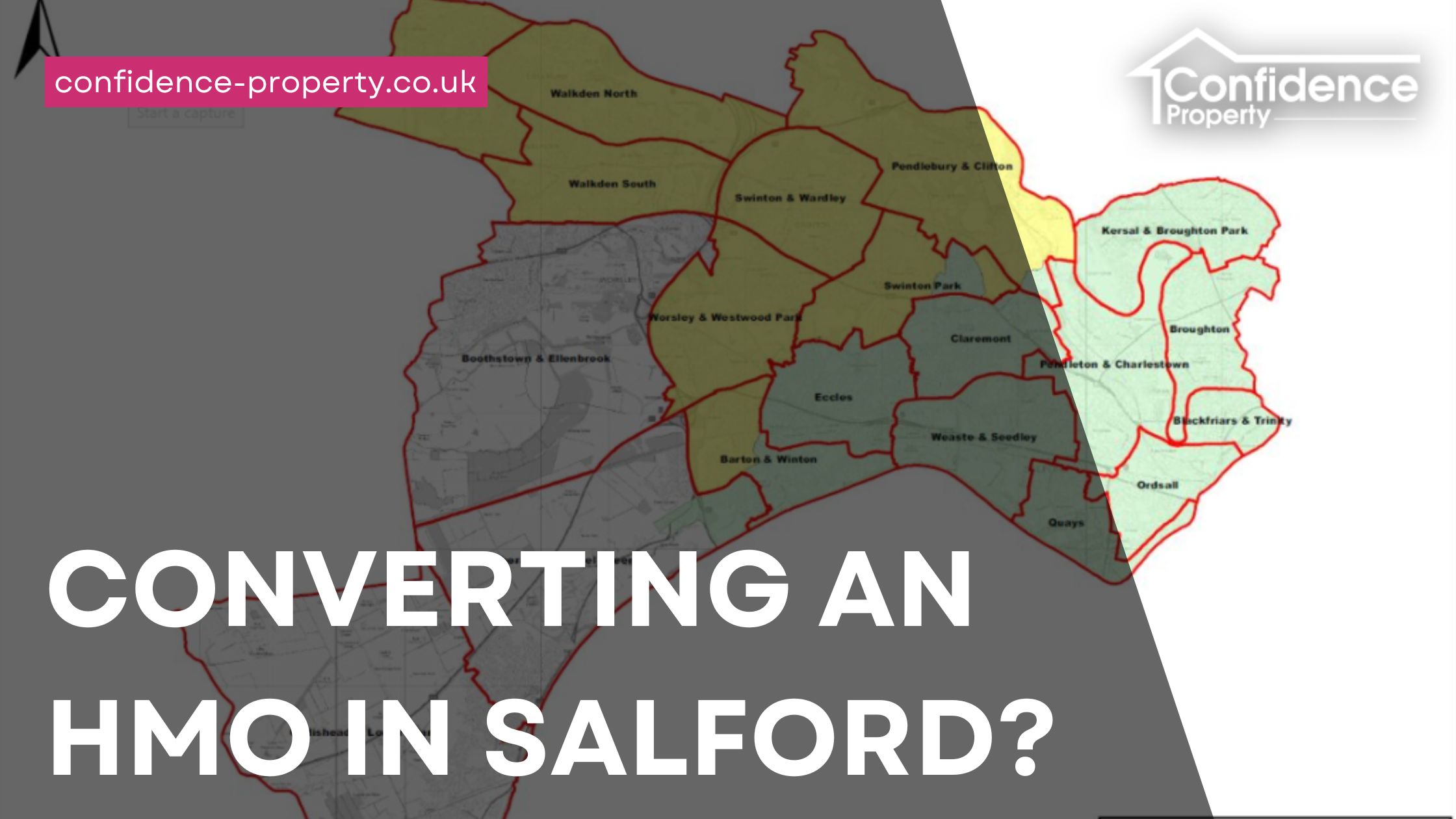
Two different licensing changes affect HMO owners in Salford in 2026. The council’s additional licensing scheme for smaller shared HMOs has ended, but a new scheme covering certain buildings converted into self-contained flats is due to begin. Whether you need a licence depends on the type and location of your property.
1. Small shared HMOs: the previous scheme ended on 19 July 2026
Salford’s additional HMO licensing scheme, which covered many shared houses occupied by three or four people, ran from 19 July 2021 until 19 July 2026. The council says licences issued under that scheme ended on that date and cannot be renewed. This is not the same as ending all HMO licensing in Salford.
If your smaller shared HMO was licensed under that scheme, check whether it is now within a selective licensing area. The property remains an HMO, and its safety, repair and management obligations continue. Larger shared HMOs that meet the national mandatory licensing criteria still need the appropriate mandatory HMO licence. See Salford City Council’s previous additional licensing guidance.
2. Section 257 converted-flat HMOs: a new scheme starts on 24 November 2026
A separate, citywide additional licensing scheme for Section 257 HMOs begins on 24 November 2026 and is scheduled to run until 24 November 2031. This is not a blanket new licence requirement for every traditional shared HMO.
A Section 257 HMO is generally a building converted into self-contained flats where the conversion did not meet the relevant building regulations standard and fewer than two-thirds of the flats are owner-occupied. This is a specific legal classification; a building does not become a Section 257 HMO merely because it contains flats.
Salford says qualifying Section 257 buildings must be licensed under the new scheme unless a statutory exemption applies. A separate mandatory HMO or selective licence may also be required for an individual flat in the building. The council publishes the Section 257 definition and licensing details, application guidance and fees. Discounted or early-application fees may apply to eligible applicants before the scheme starts.
3. What should a Salford landlord check now?
- Identify whether the property is a traditional shared HMO, a converted building containing self-contained flats, or another property type.
- Check the address against Salford’s current mandatory HMO, additional HMO and selective licensing guidance. Do not rely on a 2024 article or an expired licence.
- If the building could meet the Section 257 definition, confirm its conversion history, relevant building standards and owner-occupation position. Ask the council about any application needed ahead of 24 November.
- Check planning permission separately. HMO licensing does not itself authorise a planning use, and Article 4 restrictions can affect changes of use.
- Continue complying with HMO management and property safety standards, whether or not the previous additional licence has expired.
4. How Confidence Property can help
Confidence Property manages HMOs across Salford and Greater Manchester. We help landlords with lettings, day-to-day property management and licensing administration, aiming for hands-off HMO ownership without losing control. We can help you identify the practical questions to raise and organise the information needed for your next steps.
If you’re reviewing your property’s management or rental performance, request an HMO rental valuation or read about our HMO management in Salford. For a definitive property-specific licensing decision, check with Salford City Council or a suitably qualified adviser.
Information checked against Salford City Council guidance on 13 October 2026. Licensing and planning requirements depend on the individual property and can change.